Equality, Equity, and Equal Origins | #PSC 219
OVERVIEW: At the request of a ChocolateLife member, Episode 219 of #PodSaveChocolate will take a look at Equal Origins’ (EO) Gender Equity Index (GEI), their goals, and what the GEI purports to accomplish.
Links below to watch LIVE and to view the archived episode.

Watch and comment LIVE or view the archived episode!
Subscribe (free!) to the @PodSaveChocolate YouTube channel, like this video, comment, and share this episode to help grow the #PSC community.

Watch and comment LIVE or view the archived episode on LinkedIn.
Join my network on LinkedIn to receive notifications and to refer business to each other.

Watch and comment LIVE or view the archived episode on TheChocolateLife page on Facebook (for 30 days, then watch the archive on YouTube).
Follow TheChocolateLife on Facebook to receive notifications and catch up on other content.
Episode 219
A ChocolateLife member contacted me recently, asking my thoughts about their participating in Equal Origins’ (EO) voluntary Gender Equity Index (GEI) assessment:
Hi, Clay:
I saw […this…] and wanted to ask if you know anything about it? I checked their website and it seems they created a "tool" to check your "equality" on farms. I find [the sponsors trustworthy …], and I think it was created more by the coffee conglomerates, but I was obviously invited [for cocoa]. But it seems to me that they want us to give them the information about the farms we work with. Is it just me or is this a way to fish for strategic information?

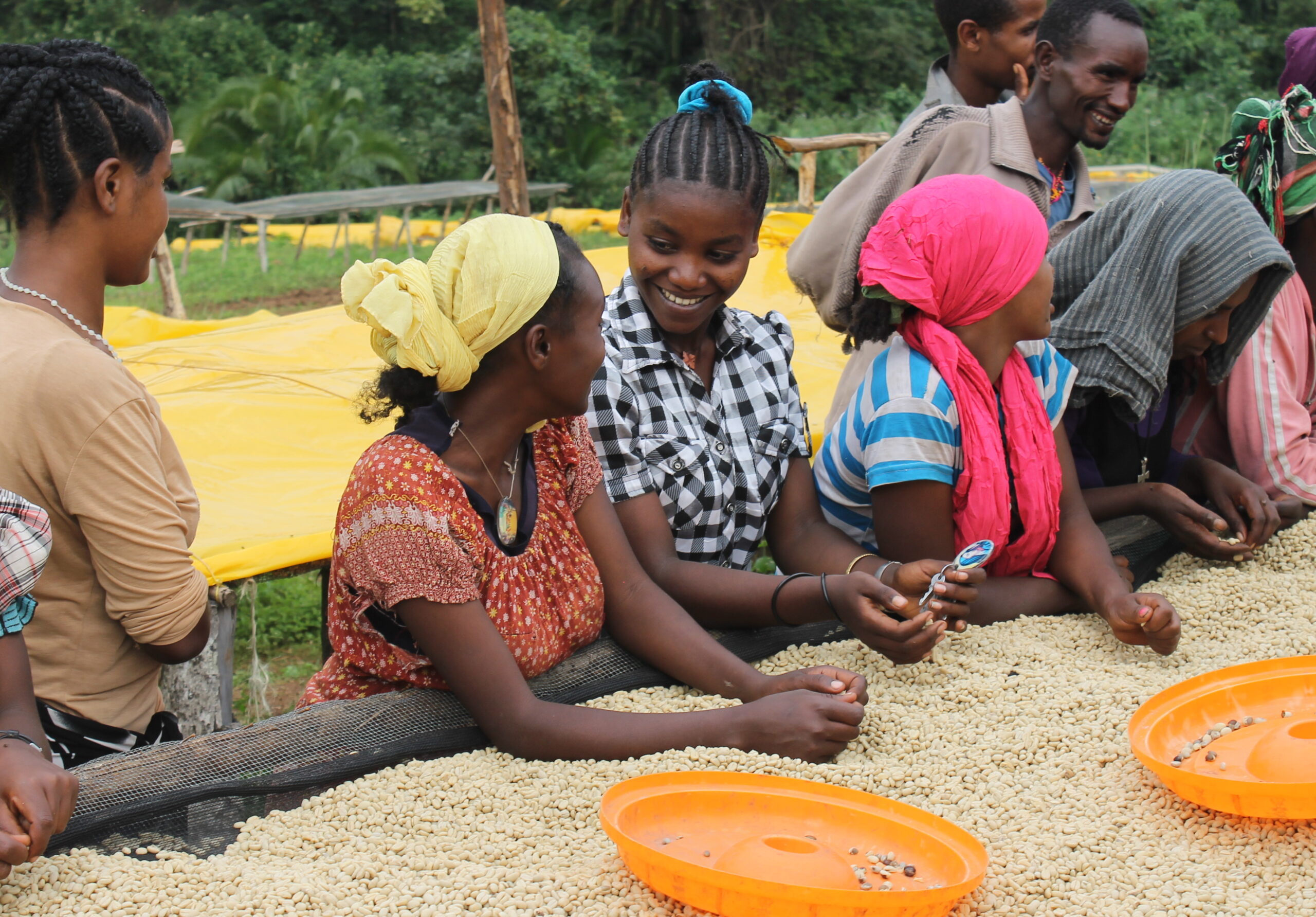
Before I begin explaining what my research found, I want to begin with some definitions, because I think that’s always a good place to start:
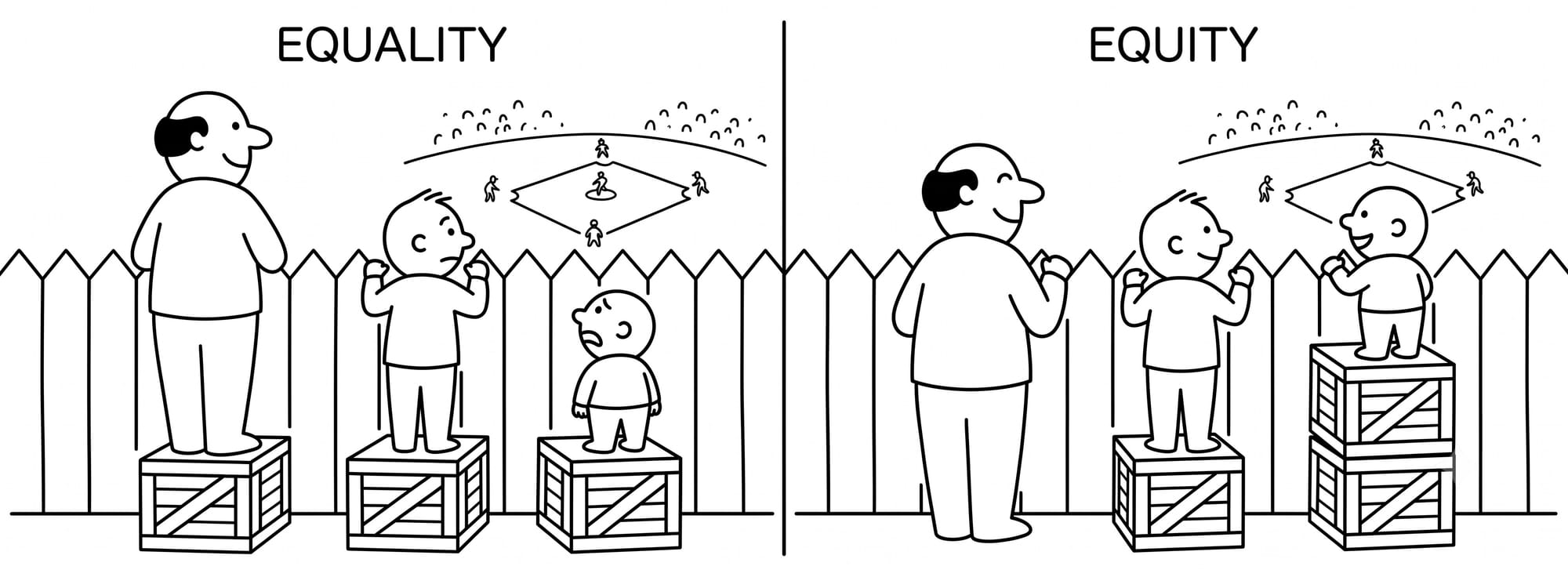
- Equality is about sameness of treatment. Same rules, same resources, same rights, applied identically to everyone. The measure of success is the input.
- Equity is about fairness given different starting positions. It proposes that identical treatment of people in unequal circumstances can produce unfair results, so treatment should be differentiated. The measure of success is the outcome, or at least the fairness of the chance.
“Equity” in this context isn't a new concept: In law it’s ancient. Aristotle’s epieikeia meant the corrective you apply when a general rule produces an unjust result in a particular case. English courts of Chancery existed specifically to soften the rigidity of common law. So ‘equity as the humane correction to a rule that's too blunt’ has a long, non-partisan pedigree.
In Ethics and the Limits of Philosophy, Bernard Williams argues that morality is a narrow, historically contingent subsystem of the ethical, one that is fixated on obligation, blame, and inescapable duty.
Some Interpretations and Their Application
- Formal equality applied to an unequal starting line preserves the gap. If you start a race late, being given the same shoes as the front runner doesn’t help.
- “Neutral” rules are rarely neutral in effect. They were designed around a default person, and everyone else absorbs the friction.
- Aristotle again: Justice means treating like cases alike and unlike cases differently. Equity isn’t a departure from equality; it’s what equality requires once you admit the cases differ.
Few people dispute these views in practice. Wheelchair ramps, sign-language interpreters, and reading glasses are all equity. The argument is over scope, not principle, or “equality of what?” Equal access to resources don’t produce equal capability. Giving a disabled person the same income as a non-disabled person does not mean they can both achieve the same results.
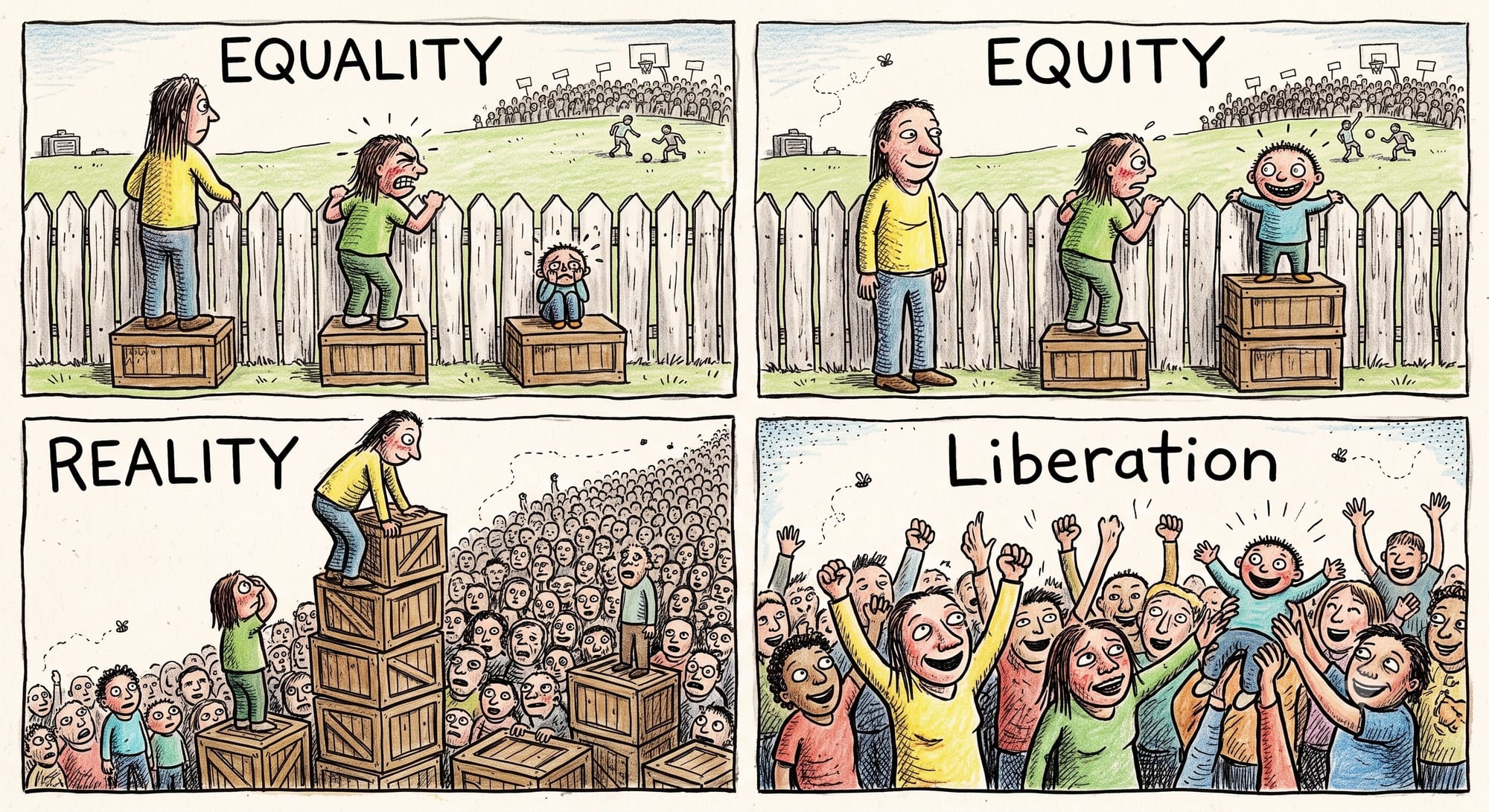
About that boxes-and-fence graphic: critics point out that the honest answer is “tear down the fence,” which is a formal-equality move. And it quietly assumes an official who can see everyone’s height. In real life that's the contested part, who’s measuring, and by what standard(s).
Examining EO’s Decade of Progress Report
Before I go there, I have to be consistent and point out that there is no privacy policy linked to in the header or footer navigation of the EO website.
I wanted to know who owned the information entered into the GEI demo as this was one of the concerns of the member who asked me about this project, so I reached out to Kimberly Easson, Equal Origins’ Founder and CEO, about this and was sent a copy of their Terms of Service document to review.
From what I read, the topic of the GEI demo data is not explicitly covered. If the idea of giving data away with no clear, published, policies about what EO can do with it bothers you, the best thing you can do is connect with Kimberly directly, and ask.
I do have to say that it is unusual for a non-profit to provide direct download links to their financial reports. This is something I wish that more organizations would do, as there is a lot you can learn from them.
- I believe that most, if not all, of the actors I name in this post are genuinely trying to do good and are not working in bad faith. Nothing I write here, or say in the live stream should be construed otherwise.
- My intent is not to undermine the work EO is doing. Instead, it is to explore what and how they report about what they are doing. In this regard I am treating them no differently than I have treated the other organizations I have looked at over the years. In my experience, lay readers are rarely critical and skeptical of reports like these, and I believe that critical examination is a foundation of informed discussion.
- I am not implying, in any way, that I am against addressing the impact of gender inequity anywhere it exists. (Which is everywhere.) In this post, I am questioning the effectiveness of the GEI in its current form and have uncovered a potential real harm that exists as an unintended consequence that I believe deserves more attention.
As always, if anyone from EO would like to join me live on a future episode of PodSaveChocolate to discuss anything in this post, the invitation is open.
Let’s begin …
… with 5 key questions a reader of the report might want answered:
- What does success look like, and how would you know you were done?
- Individual or group as the unit of moral concern?
- Do you accept unequal outcomes that result from free choices?
- Who bears the cost, and did they cause the harm?
- Is the gap evidence of injustice, or does injustice need separate proof?
| Key question | EO | Why |
|---|---|---|
| Definition of success | Weak | No endpoint, activity metrics only, unsupported income-gap claim |
| Individual vs. group | Strong | Unit of analysis is the organization, not the person |
| Free choices | Strong | Barriers are documented and obvious in this setting |
| Who bears the cost | Strong → uncertain | Voluntary so far; a policy turn changes it |
| Gap as proof | Mixed | Process audit is defensible; the framing stats aren't consistent |
A Hidden Trap
Page 2: Gender equity is not only the right thing to do, but the smart, practical path.
Page 5 does it again; it’s a matter of justice and a driver of resilient systems.
If the justification is instrumental, hinging on productivity, adoption rates, resilience, and supply chain strength, then it’s contingent on the numbers. And numbers can be audited. So: would Equal Origins drop a GEI recommendation shown to reduce yields or raise costs at origin?
If yes, it was never a justice claim.
If no, the ROI framing was decoration all along, and it should be dropped, because it invites an audit EO can’t currently pass. Look at the self-reported metrics: there’s no ROI anywhere in the report. They’re making a business argument without business evidence, in a deck aimed at business funders.
The evidence base is co-produced with the sponsors. ECOM funds the work, adopts the GEI, and supplies two of the report’s testimonials plus a case study. Same pattern with sponsor Sucafina. The Better Together numbers come from Better Together participants.
This is how the entire sustainability sector works. Here, it means that every impact claim in the document is self- or sponsor-reported, and there are no independent evaluations cited anywhere.
Look at what gets counted:
350 GEI users. 43 countries. 530,000 farming families “engaged in gender-responsive training.” 85 farmer organizations. 114 workshop participants from 33 organizations. Three governments. Six national platforms.
Every single headline number is reach or activity.
Not one of them is an outcome. “Engaged in training” is an attendance metric. This is followed, on page 16, with the assertion that the work is “closing the income gap” with no number anywhere in twenty-eight pages.
What “impact” means…
… in the Progress Report and the ECOM, Sucafina, and Cooperativa 20 de Abril case studies
From the ECOM case study’s own Impact box: prioritization of needs (country roadmaps), engaged teams (common understanding builds motivation), integrated global-to-local approach.
- The impacts are a roadmap, some motivation, and an approach.
The Nigeria team’s GEDP objectives over the next one to two years are to carry out participatory gender analysis in cocoa communities and develop gender policies for internal functioning and service provision. Cameroon’s plan focuses on increasing in-house gender expertise and conducting gender analysis so program design is informed by gendered constraints.
- The deliverable of the intervention seems to be a plan to conduct an analysis that will inform a policy that will shape a program that will eventually reach a farmer.
To their credit, ECOM’s Nigeria team flagged hegemonic gender norms and the potential for men’s opposition and backlash, and explored mitigations including work on masculinities, couples’ approaches, and dialogue with norm holders.
That’s a real risk landing on real women in real households, and EO’s own material names it rather than hiding it, which is evidence of good faith. But, it can also be used as evidence there’s a cost nobody is measuring, because backlash isn’t in the metrics.
From the Sucafina case study: a regional gender lead appointed, first staff training delivered, five GEDPs and gender-responsive budgets created, insights into each country team's capacity.
- All outputs. All internal.
They are now focusing on measurement, considering how to capture the impact of gender interventions on household decision-making and how to standardize indicators and tools across country teams.
- As of a 2024 case study about a flagship partner, the measurement system is still a “considering.” The background section explains why. At the start of the engagement, Sucafina found that despite institutional commitment, work on gender tended to be project- or donor-led, and there was no company-wide gender training and no impact measurement system that captured data beyond women’s participation in training.
The 20 de Abril case study (which was funded by the Starbucks Foundation) is the exception, and it’s a co-op rather than a trader, which fits the pattern that real numbers live closer to the ground. They created their first Gender Policy by amending statutes, formed a Gender Commission of four women and two men, and trained 108 women and 71 men. The co-op has 5,721 members.
- 179 people trained out of 5,721. Three percent. One six-person commission. One policy. Those are real, verifiable, and modest. However, the impact box still lists “increase in women's participation in decision-making,” with no baseline, and no goal line.
| Claimed | Present in the case studies? |
|---|---|
| Policies written | Yes — 20 de Abril, ECOM (planned) |
| Committees / staff | Yes — one commission (6), one gender lead (1) |
| People trained | Yes — 179 at 20 de Abril |
| Budgets allocated | Yes — Sucafina, unquantified |
| Women's income | Nothing |
| Control over productive resources | Nothing |
| Governance participation rates | Minimal (one 6-person body) |
| Yield, adoption, productivity | Nothing |
| Any before/after on anything | Nothing |
Some Analysis
Tl;DR: Equal Origins has built a diagnostic that measures whether organizations are structured to deliver, and by its own account that’s the right unit of analysis.
- If that’s the case, they should, in my opinion, consider not claiming poorly supported (in the report and case studies) income gains. They have measured the plumbing but are promoting how much more water is flowing through the plumbing, and how much more easily.
Page 5 of Decade of Progress says gender equity is a matter of justice and a driver of stronger, more resilient agricultural systems. Page 2 does it again: the right thing to do and the smart, practical path.
That's three claims stacked in one sentence. Justice is a moral claim, there’s an obligation, someone is blameworthy. The right thing to do is an ethical claim about a social expectation of conduct. Smart and practical is prudential; It’s a business claim.
The GEI is an ethics instrument. GALS (Gender Action Learning System) is a morals intervention.
The GEI is a scored diagnostic against criteria drawn from the International Food Policy Research Institute’s (IFPRI) Reach/Benefit/Empower/Transform framework. It tells an organization where it ranks against a standard it didn't write. Nobody is asked to believe anything. It’s an audit checklist, ethics in the thinnest possible sense.
GALS is the opposite. Families draw their own diagrams, name their own goals, chart their own action plans. It doesn’t tell families what their household should look like, it is a tool for them to articulate what they want their household to look like.
The GEI instrument reports compliance, GALS produces conviction.
The best argument against what I just wrote, and I want to point it out myself:
“Beyond the creation of plans, the Sucafina teams found the process itself and the mindset it engendered to be beneficial, commenting on how their participation had stimulated engagement with gender issues across the teams and had shifted their thinking from responding or complying with externally led requirements, to being driven by the results they wanted to see.”
That is a documented move from compliance to conviction, produced by the GEI and BTW processes. It is self-reported, but it needs to be acknowledged.
If that is, in fact, what the GEI does, my split between the ethics instrument and the morals intervention is too clean. A diagnostic that arrives as an external requirement can become an internal commitment. That is what every professional code hopes will happen, and sometimes it does.
Two things stop me from handing over the point entirely:
- It is self-reported, by teams describing a workshop to the organization that ran the workshop, published by that organization. While that is worth something, it is not independent evidence.
- It happened while the GEI was voluntary. Nobody’s credit line depended on the score.
Guess which one is being scaled?
The Decade report’s forward strategy is the GEI, into EU legislation, into global frameworks, non-negotiable. GALS can’t scale; it’s 25 to 40 people in a room for days. The thing that scales is the thing with the least moral content. Those are the logistical realities.
In fairness, it is worth noting that 20 de Abril's own plan includes a financing service for vulnerable women. Gender-linked credit, designed from the bottom up, by the co-op itself. The gender-linked credit facility is not the main concern, in my mind. Who writes the criteria, is.
Which is the whole question, and it is why the lending idea matters more than it looks.
Diving Deeper
Read the Cooperativa 20 de Abril case study again.
Vilma López Sevilla says the shift in attitudes allowed them to establish their gender policy. Attitudes first. Policy second. Leaders learned, introduced what they learned to members, then amended the statutes.
That’s moral formation, and it left a policy behind as a trace.
Now here is where the idea I want to test comes from.
Buried in the Sucafina case study, in a short list of what the company is thinking about next:
They [Sucafina] are also considering how to use the Gender Equity Index (GEI) with other supply chain partners and the potential of GEI scores being part of KPIs for lending.
Read the hedges before anything else. Considering. The potential of. Nothing has been built, piloted, or announced. This is Sucafina thinking out loud, not EO proposing anything.
EO published the thought in its own case study rather than leaving it out. That is not the behavior of an organization looking to hide the ball.
At the same time, it also not a wild leap. The Sucafina and ECOM case studies both note these companies already provide financing as a core service (“including financing, risk management, and quality control” for Sucafina; “including financing, agricultural support, and quality enhancement” for ECOM). So the lending relationship pre-exists the GEI.
Game this out with me. What happens when trade finance is contingent on a GEI score? Will a co-op amend its statutes because it needs working capital?
Both roads produce an identical row in the data: amended statutes.
Not because EO’s metrics are weak, but because no organizational metric can; a policy on the wall reads the same whether it was believed into existence or bought.
That’s the much bigger problem with the lending-KPI line than cost-shifting. It doesn’t just move who pays: It converts every subsequent gender policy from evidence of belief into evidence of nothing.
The people running the GEI in the field are largely nationals of producing countries. Favour Yusufu at Tulip Cocoa Nigeria. Robinah Najjingo, Sucafina’s East Africa gender lead. Delmis Paz and Bibiane Taku on EO’s own staff. Gilbert Gatali and Vera Espindola on the board.
That doesn't dissolve any asymmetry. It relocates it. Authorship and implementation are split.
The criteria are set where the capital is.
ECOM (Switzerland), Lavazza (Italy), Barrie House (US), Allegro (US), Paulig Group (Finland), Caravela Limited (UK), EFICO (Belgium), Jot (US), LWR (US)/MOCCA, and 4C (Germany) put up $127,000 to develop the GEI in 2021, per EO’s own account.
That’s the Certification Industrial Complex structure exactly. The producing country/consuming country (the framing I prefer over global north/south, developed/developing, first/third world) isn’t just more polite, it names the right axis: Who writes the standards versus who is measured against them.
Some Concluding Thoughts
Ethics and morals are the same word in two languages, and every distinction is a convention. As I use the terms, ethics are external (societal) expectations and morals are internalized ones.
Equal Origins makes a moral claim, an ethical claim, and a prudential claim in a single sentence, which lets each one retreat behind the others when pressed. Its two instruments split along that seam: the GEI produces compliance, GALS produces conviction, and only the compliance instrument scales.
This resolves into something sharper than it first appears.
- If the business case is real, imposing gender-responsive service provision is a coordination device rather than a moral imperative. It solves a collective action problem that no single trader could solve alone, it makes everybody better off, and nobody has been imposed upon in any sense worth the word. That is ethically easy.
- If the business case is not real, then a diagnostic score gating capital is a moral view enforced through market power, applied by the parties who wrote the criteria to the parties who did not.
Nobody can say which, because there are no return-on-investment figures anywhere in twenty-eight pages of the Decade report, aimed squarely at business funders.
So the measurement gap is the only thing standing between a coordination device and an imposition, and Equal Origins is scaling toward mandate before closing the gap.
Which lands us back on my own definition, the one I have used for years. Ethical sourcing means a relationship in which one trading partner does not take unfair advantage of a power imbalance.
A GEI score used as a lending KPI is a trading partner using a power imbalance to coerce conduct from a weaker one.
By my own definition, that is unethical sourcing, deployed in the name of equity, and the only thing that could rescue it is business evidence nobody has produced.
Epilogue
 Clay Gordon
In the post linked to above, I stated:
The leaders of the Free Produce Movement understood something fundamental: you cannot separate the morality of consumption from the morality of production.
I think that statement takes on some new weight in light of this examination.
Future Episodes
Episode Hashtags
#cocoa #cacao #cacau
#chocolate #chocolat
#PodSaveChoc #PSC
#LaVidaCocoa #TheChocolateLife
#PodSaveChocolate and #TheChocolateLifeLIVE Archives
To read an archived post and find the links to watch archived episodes, click on one of the bookmark cards below.
 Clay Gordon
Episodes 201-300 (links to older PSC archives are in the top nav).
Clay Gordon