Updated: Who the Heck is Layne Kilpatrick? Part 1 of 2 | #PSC 203
OVERVIEW: Episode 203 of #PodSaveChocolate casts a critical eye on the musings of this struck-off pharmacist and current self-styled hormone doctor and what he has to say about “lab-grown” cocoa and chocolate, and much, much more.
Click a link below to view the archived episode.

Watch and comment LIVE or view the archived episode!
Subscribe (free!) to the @PodSaveChocolate YouTube channel, like this video, comment, and share this episode to help grow the #PSC community.

Watch and comment LIVE or view the archived episode on LinkedIn.
Join my network on LinkedIn to receive notifications and to refer business to each other.

Watch and comment LIVE or view the archived episode on TheChocolateLife page on Facebook (for 30 days, then watch the archive on YouTube).
Follow TheChocolateLife on Facebook to receive notifications and catch up on other content.
Episode 203 Overview
Two Premium members of TheChocolateLife sent me links in the past 48 hours to videos posted by Layne Kilpatrick on Instagram and YouTube.
Why Should Anyone Care?
Because, Kilpatrick has a massive, engaged social media reach, with over 1.1 million followers on Instagram alone.
In the first part of this four-part series, Kilpatrick warns about “Big Chocolate’s” efforts to replace tree-grown cocoa with lab-grown cocoa in chocolate.


This short has over 725,000 views on YT. This is pretty remarkable for an account with < 30,000 subscribers. This video has over 450,000 views on Facebook (from > 230 followers).
Kilpatrick pivots, in part two, to teasing a warning about Mars and a lab at UC Berkeley using CRISPR to create disease and pest-resistant varieties of cacao trees.

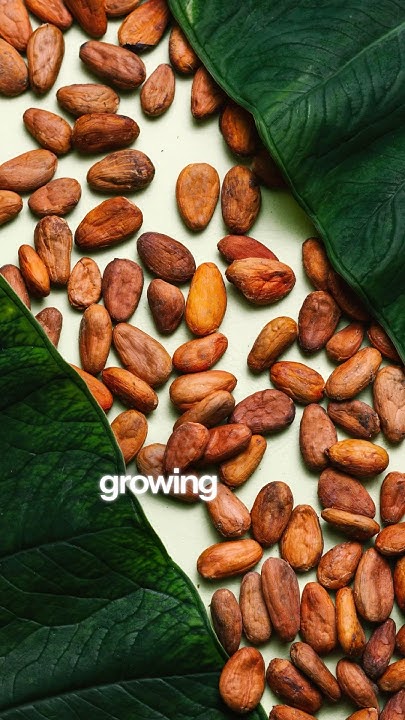
This short has over 150,000 views on YT.
The IG reel version of the above YT short has over 88,000 views, more than 32,000 likes, and over 2,000 comments (some of which show a surprising degree of sophistication). But there are always trolls, and I don’t have the time (or patience) to evaluate over 2,000 comments systematically.
In part three, Kilpatrick jumps the shark, asking right out of the gate, “What gave Mars the right to edit the genetics of every cocoa tree on Earth?” That statement reveals a complete lack of awareness (deliberate?) of Mars’ history in this area and does not consider what it would cost – and how long it would take – to “edit the genetics of every cocoa tree on Earth.”

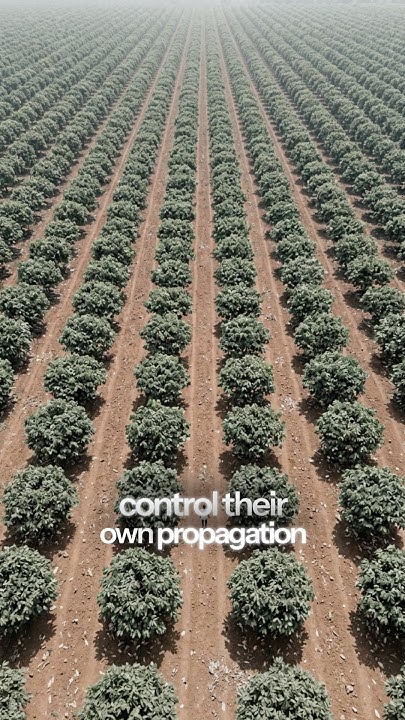
Another fundamental misrepresentation: a negligible amount of pollination in cacao is done by wind-borne pollen.
So, Who the Heck is Layne Kilpatrick, anyway?
The TL;DR: Kilpatrick is a “struck off” pharmacist in California who had his pharmacist license and pharmacy permit revoked due to serious unprofessional conduct involving probation violations, drug diversion at a prison pharmacy, unlawful possession of controlled substances, self‑prescribing, and mishandling of patient records.
The California Board of Pharmacy stipulation and order in Case No. 2378. (Available as a PDF on the Board’s site.)
Kilpatrick’s website, HormoneSpecialist.net (I will not link to it), does not acknowledge the California disciplinary actions. It instead presents a personal brand built on a tripod of:
- A pharmacist (Kilpatrick does not have a medical degree), educating about “hormone disruptors.”
- Offering “clean” compounded hormone protocols and supplements (associated with operations in Idaho and Utah).
- Criticizing “impure, mass‑produced drugs” and “Big Pharma.” (A conspiracy theorist?)
I mention these things not to engage in an ad hominem attack on Kilpatrick or to poison the well before Kilpatrick can begin talking.
Rather, I point these things out so you can make your own decision about how much you should/can/will trust Kilpatrick as a source.
I personally find that his not mentioning the circumstances of his license and permit in California being revoked is a caution flag. It does not automatically disqualify him, but I can not give what he says an automatic benefit of the doubt. Not trust but verify; verify before trusting.
That sets up the rest of this post.
Fact-Checking Layne’s Shorts
Deconstructing the Playbook
I am – and by I, I mean we, dear reader, are faced with an all-too-common example of what is referred to as Brandolini’s Law:
This law highlights the challenge of debunking falsehoods, as they often spread rapidly and require extensive research and evidence to correct. Consider:
Step 1:
Start with some easily fact-checkable points to establish credibility to an audience primed to believe but willing to “do their own research” (which means either Googling or using ChatGPT like a search engine).
Video Transcript of Part 1 (of 4)
Japan's biggest chocolate company just signed a 10-year deal to put lab grown cocoa in your food. And the label may not tell you. A California startup says they're growing cocoa in a tank instead of on a tree. And it's hitting the market this year. So, let's look at what's actually true about this and what's marketing hype.
The company's called California Cultured. And in an environmental website article about him, it says that they take cocoa plant cells from from a cocoa bean, grow them in bioreactors, and then dry them into cocoa powder.
They've got a 10-year supply deal with Meiji. That's Japan's biggest chocolate company. So, this is happening. So, let's do a hype check on four of their biggest claims.
Hype check number one. They're claiming FDA filing. All that means is they filed a self-affirmed, generally recognized as safe notice. The FDA's website does not list a response letter yet. So, there's been no FDA action on this product. So, don't be misled there.
Fact-check: This is true, as far as it goes. BUT ... did you catch the final sentence? Misled by what? This is language that appeals to emotion, not reason, implying that there is something nefarious about the GRAS process and what is on the GRAS lists.
Hype check number two. They claim 20 times the flavanols of regular cocoa. Flavanols are the healthy part of chocolate, but there's zero published primary data documenting this 20x number. No peer-reviewed paper, no third-party certificate of analysis, the gold standard. So, that number is pure marketing until they show their work.
Fact-check: This is true. There appears to be no independent evaluation of the flavanol content claims made by California Cultured.
Hype check number three. The article spends a lot of time on traditional chocolates' environmental footprint, water usage, deforestation, emissions. Fair enough. But here's what's missing. California Cultured hasn't published a single specific water use number for their own bioreactor process. Not on their website, not in their blog, not in the any trade press. Every claim's qualitative like uses less water or more sustainable. That's a slogan, not a comparison. Bioreactors are not water free. They use water for the nutrient broth, for sterilization, for cleaning, for cooling. So, when a company tells you their process is more sustainable, but won't show you the math, that gives me pause.
Fact-check: This is true. BUT ... why the focus on water rather than LCA (life-cycle assessment)? Water usage is just one small part of what contributes to a process or product being sustainable.
Hype check number four. Plant geneticist David Salt put it best in an interview. He said, "There isn't a molecule in cacao beans that's chocolate flavor. The overall chocolatiness is a bouquet of different compounds." A study identified 88 distinct flavor compounds that are generated by wild yeasts, lactic acid bacteria, and acetic acid bacteria. During the 4 to 7 days a traditional cocoa bean ferments, those microbes come from pod surface, insects, the worker's hands and utensils, even the wooden fermentation boxes themselves. And then roasting drives more reactions that give it that actual chocolate aroma. Cell culture in a sterile tank skips both steps.
Fact-check: It is true that there isn’t a single chemical that signals chocolate flavor. BUT ... where does the chocolate flavor come from in a bioreactor? This is presented as a false dichotomy, saying, essentially, “wood is good, metal is bad”, overlooking the fact the cell culturing process could involve fermentation using natural yeasts and bacteria.
So, this isn't really a chocolate replacement. It's a flavanol rich cocoa derived powder. Different product.
Observation: Okay, so it’s a different product. No one who knows the science of chocolate is saying that a flavanol-rich powder is a replacement for chocolate. It’s an ingredient in a “choc-alike” product. But we already have those – they’re colloquially called compound and have been around for a long time.
The chocolate you know and love is like a nuanced wine. By the way, what will the label say on these products? Will we know before we purchase if we're buying lab grown cocoa? Watch for this issue. I hate label manipulation. So, here's my take on this. There may be a place for this product in the food industry, but they need to call it what it is. I don't really know if this is if it really even qualifies ...
Observation: The move from “nuanced wine” to labeling questions is a non-sequitur. One reason we’re having this discussion is that there is a debate about how “chocolate” made with ingredients not derived from tree-grown cocoa will be labeled. That debate has two parts: What goes on the front of the label and what goes on the back. As a colleague has pointed out, that will vary by jurisdiction. What the FDA decides will differ from what the EU, the UK, Japan, China, India, etc., decide.
Conclusion: What Kilpatrick has done here is frame the next three parts of his screed (my term) with largely true and easily verifiable fact claims. That serves to establish his credibility when it comes to the claims he makes in the next installments, which rely heavily on opinion and loaded language from someone who lacks subject matter expertise in chocolate and cocoa.
Step 2:
Once you’ve got them hooked, pivot to a different target and start developing the basis for strawman arguments.
Video Transcript of Part 2 (of 4)
I made a reel recently about California Cultured. They're the startup company that's growing cocoa cells in a tank. A lot of you asked, "Is this just one company?" No, it's the entire industry. But wait till you hear what the Mars candy company is doing that's far worse in my view.
Fact check: It’s not the entire industry. The biggest manufacturers are investing in alt.cocoa and will offer products made with alt.cocoa to their customers, but they do not constitute the entire industry.
Observation: Here’s the pivot. We’re going from cell culturing to what Kilpatrick is setting up as a strawman.
Here's what every major player in the chocolate industry is doing right now. Lindt is investing in lab grown cocoa. Mondelēz, the maker of Cadbury, Oreos, and Toblerone, is investing in lab grown cocoa butter.
Fact check: Not every major player is investing in lab-grown cocoa. Sure, most are exploring its uses, but that’s not the same thing as investing in tech companies. Also, cell-culturing is not the only (or even the most common) manufacturing approach: precision fermentation is.
Observation: Having a nature-identical deodorized (without the use of hexane) cocoa butter for pharmaceutical and topical applications could be a good thing!
Barry Callebaut, the world's largest cocoa processor, is investing in cocoa cell culture. Barry Callebaut isn't a name you'd recognize on a wrapper, but they supply chocolate to Hershey and Nestle under long-term contracts. When they move, half the candy aisle moves with them.
Fact Check: Callebaut makes ingredients that are found in about 25% of all products that contain chocolate - and not just candy. This is a broad generalization that sounds good, but can’t be justified with data.
But Mars, the makers of M&M's, Snickers, Dove, Twix, Milky Way, Mars bars, and Three Musketeers among others, is doing something completely different, and this has caused for alarm in my opinion. Now, let me give you some context around why this industry is doing this.
The cocoa supply chain is in real trouble. Global chocolate demand's rising about 3% every year. At the same time, 70% of the world's cocoa comes from West Africa. And West Africa is getting hammered by droughts, higher temperatures, and a nasty virus. Pests and diseases cause yearly losses of about 30 to 40% of the total global cocoa production. That's a lot.
Fact Check: The 30-40% loss number is widely used.
The question isn't whether there's a real problem. There is. The question is whether the solutions they've chosen are proportionate to the risk. This is where it gets interesting. Mars partnered with a lab at UC Berkeley where CRISPR, the gene editing technology, was developed. They're going to modify the cacao trees genetic structure by clipping out certain genes to make them more resistant to disease and drought tolerant.
Observation: Another non-sequitur. Kilpatrick pivots from losses to whether the solutions are proportionate to the risk without mentioning what the risk is first.
Listen to what Brian Staskawicz said about the partnership. He's the lead Berkeley scientist on the Mars project. "We don't want to make the same mistakes as GMOs." He said there was a lot of public backlash and fear of Franken food. That's the scientist running the project, worried about his own work.
Fact Check: Staskawicz is a prominent plant pathologist at UC Berkeley and has been involved in plant‑genome and disease‑resistance work. However, I can’t find any evidence to confirm the claim that he’s the lead Berkeley scientist on “the Mars project.”
Observation: The “any use of gene editing bad” framing leans hard into conspiracy theories and science denial.
Observation: “We don't want to make the same mistakes as GMOs” is consistent with how many CRISPR crop researchers talk. As a verbatim quote, it can’t be verified.
I think it's interesting he thinks of this product as different from a GMO. If gene clipping isn't gene modification, then I'm a red number 40 M&M. I've got more to tell you on this, but I'm out of time. Next reel, I'll tell you exactly why gene editing a cacao tree is in a whole different category of risk than growing cocoa cells in a tank.
Observation: “...he thinks of this product as different from a GMO,” is likely true in spirit, but again, gene-editing advocates do differentiate CRISPR from classic (transgenic) GMOs. This framing is a live regulatory, philosophical, and scientific debate. Kilpatrick’s sarcasm is dismissive commentary.
Step 3:
Lean into the strawman arguments, lacing them with an unhealthy dose of conspiracy theorizing to scare people: Big Food tech is out to fool you, and they think you’re too dumb to notice THE TRUTH that Big Chocolate doesn’t want you to know about the evil plans to secretly turn every cocoa tree on the planet into a deadly GMO.
Video Transcript of Part 3 (of 4)
Who gave the Mars candy company the right to edit the genetics of every cocoa tree on earth?
Observation: No one “gave Mars the right to edit the genetics of ever cocoa tree on the planet.” That is a deliberately hyperbolic misrepresentation of the facts (Mars never asked for the “right” to do this) designed solely, in my opinion, to fear-monger. We should be asking why we moved from cell culturing to talking about GMOs?
In the last reel I told you Mars is using CRISPR to gene edit cocoa trees. Gene editing of cocoa trees is a different risk category all together from growing cocoa cells in a tank. Cells in a tank stay in the tank. If something goes wrong, you just shut it down. The problem doesn't escape into nature. A gene edited tree is the opposite.
Fact Check: No one is gene editing actual trees. Individual cells are edited using CRISPR, then cultured in a lab and, eventually, (using processes that include somatic embryogenesis), seedlings are planted to determine whether or not the desired characteristics (using tests that include SNP tests), can be heritable. CRISPR, combined with an understanding of the genome, can reduce the time conventional breeding takes by years or decades.
Cocoa is a cross-pollinating perennial that releases pollen year round for 25 to 40 years. Once a CRISPR edited cocoa tree flowers near other trees, edited pollen enters the regional gene pool through insect pollinators. Yes, industrial plantations control their own propagation through grafting and clones, but they don't control where pollen is carried or drifts on the wind. And in Ghana and Côte d'Ivoire, where roughly two-thirds of the world's cocoa is grown, small farmers routinely plant seedlings from seed pods from their own trees, carrying edits delivered by insects from neighboring trees.
Fact Check: The rate of pollination in cocoa from wind-borne pollen is negligible, effectively zero. The overwhelming majority of pollination is done by insects, as Kilpatrick says. BUT ... the “harm” suggested is theoretical and lacks a nuanced understanding of cacao propagation and hybridization in the wild that may be time-limited.
It's pretty concerning that you can't unwind it this on either pathway once it happens. Genetic change is slow on purpose. Natural selection filters harmful mutations because not many of those offspring live long enough to reproduce. An engineered edit skips that filter entirely. The moment a small farmer germinates seeds from a nearby tree, the edit goes straight into the next generation. Cocoa takes 5 to 10 years to mature and lives for decades.
Observation: Natural selection filters all mutations, not just harmful ones.
If the edit causes a subtle problem, it gets multiplied across farms for years before anyone notices. And by then, the genetics are already embedded across the region.
Observation: Kilpatrick has, obviously, never been on a cocoa farm. That’s not the way things work in the real world: this is a hypothesis designed to strike fear in the hearts of people who know less than he does.
The question is, does anybody have the right to edit genes on all cocoa trees, including trees they don't own? Because that's what's going to happen. How do the affected countries respond? Well, Ghana exempts most CRISPR edits from regulation entirely. As long as a company just clips out sections of genetic material and doesn't add foreign DNA, there's no application, no risk assessment, no field trial requirement.
Fact Check: No one has asked for “the right to edit genes on all cocoa trees, including trees they don't own?” SO ... that is not going to happen.
Ghana's own guidance says gene edits present no unique environmental concerns. Côte d'Ivoire grows 42% of the world's cocoa. They passed a biosafety law in 2016 with no functioning regulator to enforce it. So, in the two countries that produce most of the world's cocoa, the regulatory answer is either this is exempt or nobody's home.
The scariest part of the chocolate story isn't happening in a tank. It's happening in a field. By the time we figure out what we've done, it'll already be everywhere. And there's another side to this that's going to set your hair on fire. Watch for part four, the last in the series.
Observation: The math doesn’t work on several levels.
Using FAO stats (from the FAOSTAT database), there were nearly 4,000,000 hectares of land planted in cocoa in Côte d’Ivoire in 2024. Assuming an average planting density (to make the math easy) of 1000 trees per hectare, that’s 4 BILLION trees. If each CRISPRd seedling costs just $1,00, the cost for just the seedlings will be 4 billion dollars. That figure does not include any other costs, which could easily quadruple even before considering lost productivity. would take decades to implement, according to Mars’ own research. Where does the money come from? Where does the labor come from?
UPDATE
I mentioned that I would include another file with more meta-research about the claims Kilpatrick makes in the first three videos.
Step 4:
Ramp up the rhetoric, pivot again, (and probably try to sell you something).
This will be covered in a separate episode of #PodSaveChocolate when it lands: Who the Heck is Layne Kilpatrick? Part 2 of 2
Future Episodes
What Chocolate Can Learn From Coffee
Episode Hashtags
#cocoa #cacao #cacau
#chocolate #chocolat #craftchocolate
#PodSaveChoc #PSC
#LaVidaCocoa #TheChocolateLife
#PodSaveChocolate and #TheChocolateLifeLIVE Archives
To read an archived post and find the links to watch archived episodes, click on one of the bookmark cards below.
 Clay Gordon
 Clay Gordon