Thoughts on the 2026 Summer Fancy Food Show

Is "Elevated" the New Premium? Coconut Sugar: Better, or Just Coconuts?
I always love attending the annual NY Fancy Food Show (FFS). It’s the proverbial box of chocolates: you never know what you’re going to get. Or find. Or taste.


Last year I saw Dubai chocolate in various forms, by many makers. This year, I heard the word “elevated” a lot.
It’s not on the label, but in the marketing pitches. Anecdotally, PR people over the past year have noted that “elevated” seems to convey more value to consumers than “premium,” the latter perhaps being overused.
Foods at this year’s show wanted to provide an “elevated” experience. Authenticity and simplicity were key themes as well. This year, three themes popped for me in the chocolate space:
- Clean labeling
- “Better for you” ingredients
- Mindful Indulgence
Clean Labels
The idea: leverage having as few ingredients as possible, focusing on simpler but authentic. Definitely distance your product from any hint of ultra-processing and ingredients with baggage. A few examples:
Only 4: Brazilian maker, 70% bar, boasts only 4 ingredients: Brazilian cacao, coconut sugar, cacao butter, and coconut oil, an unusual ingredient for a chocolate bar.
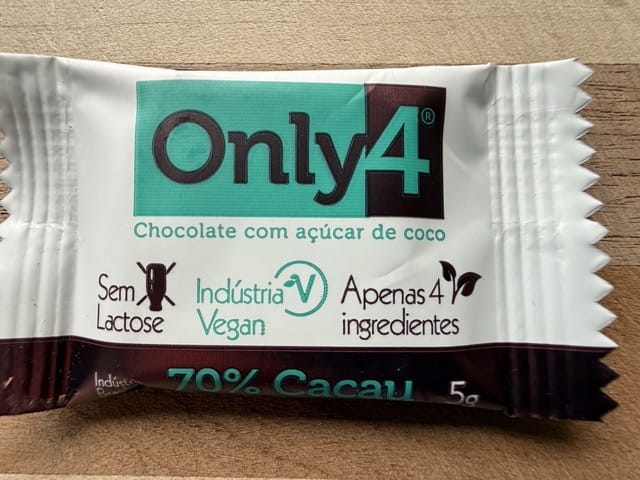
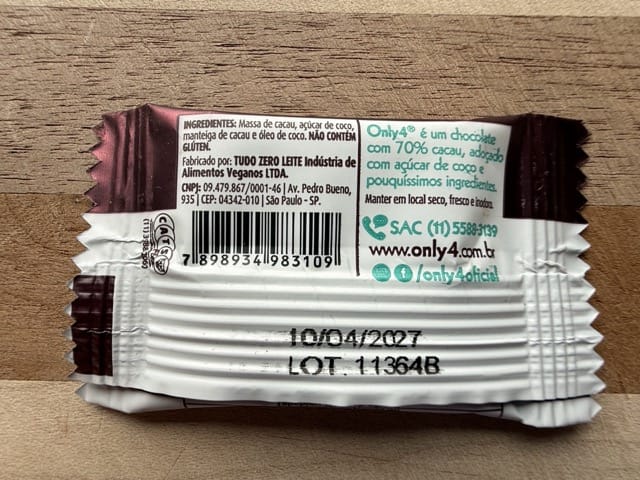
Spring & Mulberry: 3 ingredients in the all dark 70% bar. “Date-sweetened,” so all the sweetness comes from ground-up dates, which technically allows the label to say “no added sugar.”

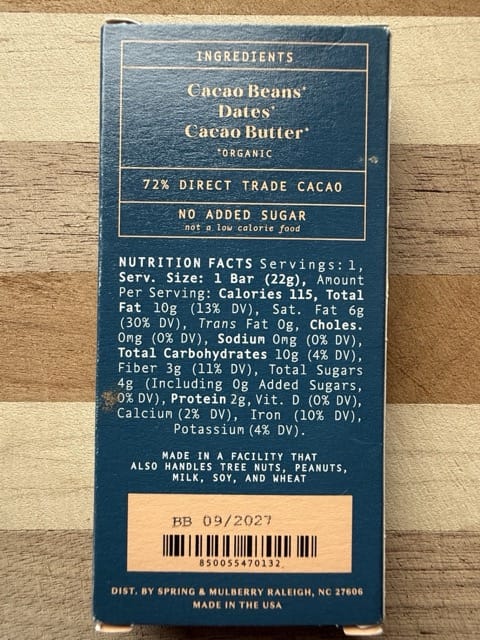
Note: Ground dates can lend a gritty texture to chocolate. This year, the 70% bar seemed a little less gritty. On the plus side, the dates bump the fiber and potassium content of the bar.
“Better-for-you” (maybe?)
Some makers cleaned their labels by calling out what WASN’T on them: “No GMOs,” “no seed oils,” “no dairy,” “no artificial flavors/sweeteners/colors.”
Coconut sugar was having a moment at the FFS. It replaced cane sugar as the “in” sweetener. Why, I asked? (I was fairly certain of their reason, but I wanted to hear the vendors‘ perspectives.) Popular responses:
- “Coconut sugar has a lower glycemic index.”
- “It has fiber.”
- “It has nutrients in it.”
All “technically” true, but the reality is more boring. The top line on coconut sugar:
- It has a lower glycemic index but the difference was clinically insignificant in well-controlled studies (like this one). No major health authority endorses coconut sugar as a means of managing blood glucose levels for anyone.
- It has a soluble fiber called inulin, considered a “prebiotic” that helps feed good gut bacteria. But it’s present in a really small amount.
- It contains some minerals, including iron, zinc, and potassium, but in amounts small enough to be insignificant.
Taste-wise, it can lend a faint coconut note to the product, which may or may not be desirable.
Chef Poppin: One plant-milk-chocolate-covered popcorn even claimed it used “premium ingredients,” noting the antioxidants in its coconut oil, but the other ingredients would fit most definitions of ultra-processed.
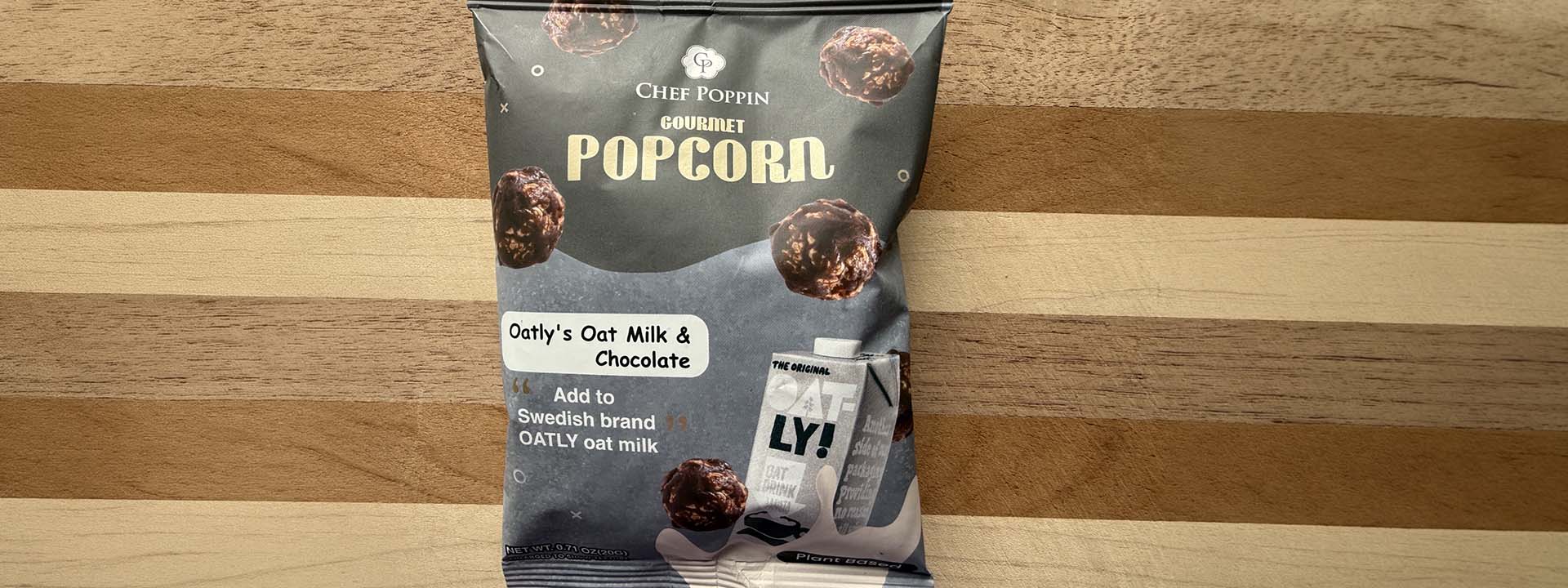
Note: the rear package label was gray, the text was white, but the part that had the marketing was a darker gray, so the text was easily read. The label portion with the ingredients and nutrition information was a very faded gray, making the text with ingredients harder to read.
“Functional Foods, Mindful Indulgence”
People want to indulge, but they want that indulgence to be FWB (Food With Benefits™). More than just having a fun experience, they want a food to help them sleep, or add more protein, or improve their thinking.
“Functional foods” have benefits that go beyond basic nutrition. Foods with omega-3 fats, such as salmon, or lycopene, such as tomatoes, or calcium-fortified orange juice, are “functional foods.” At the FFS, lots of things were added, seemingly to make the eating experience feel more purposeful, even if facts didn’t always match the hype.
It’s the “mindful indulgence” factor at work. Some examples:
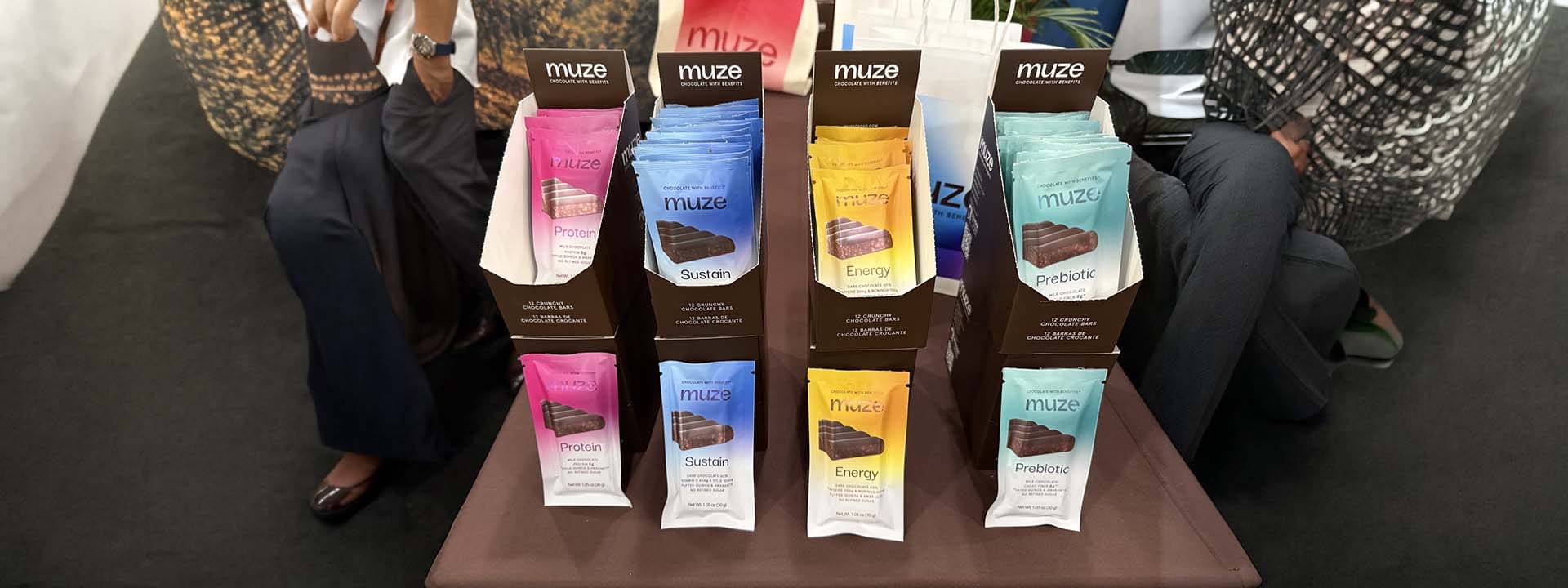
MUZE Chocolate identifies as “chocolate with benefits,” and uses only Ecuadorian cacao. Bars were labeled as “Prebiotic” and “Protein”.
In the former, the primary prebiotic is cocoa fiber – a whopping 8 grams per 30-gram bar, nearly 1/3 of the Daily Value of fiber. The protein bar has 8 gm of protein from whey protein and whole milk powder. It’s a reasonable amount of high-quality protein for a 170-calorie treat. Most bars have puffed quinoa and amaranth as well.
The other “functional” bars, such as the “Dream,” “Libido,” and “Focus” bars, have added ingredients that “support” (meaning they can’t actually “produce”) the said benefit. The sweetener? You guessed it: coconut sugar.
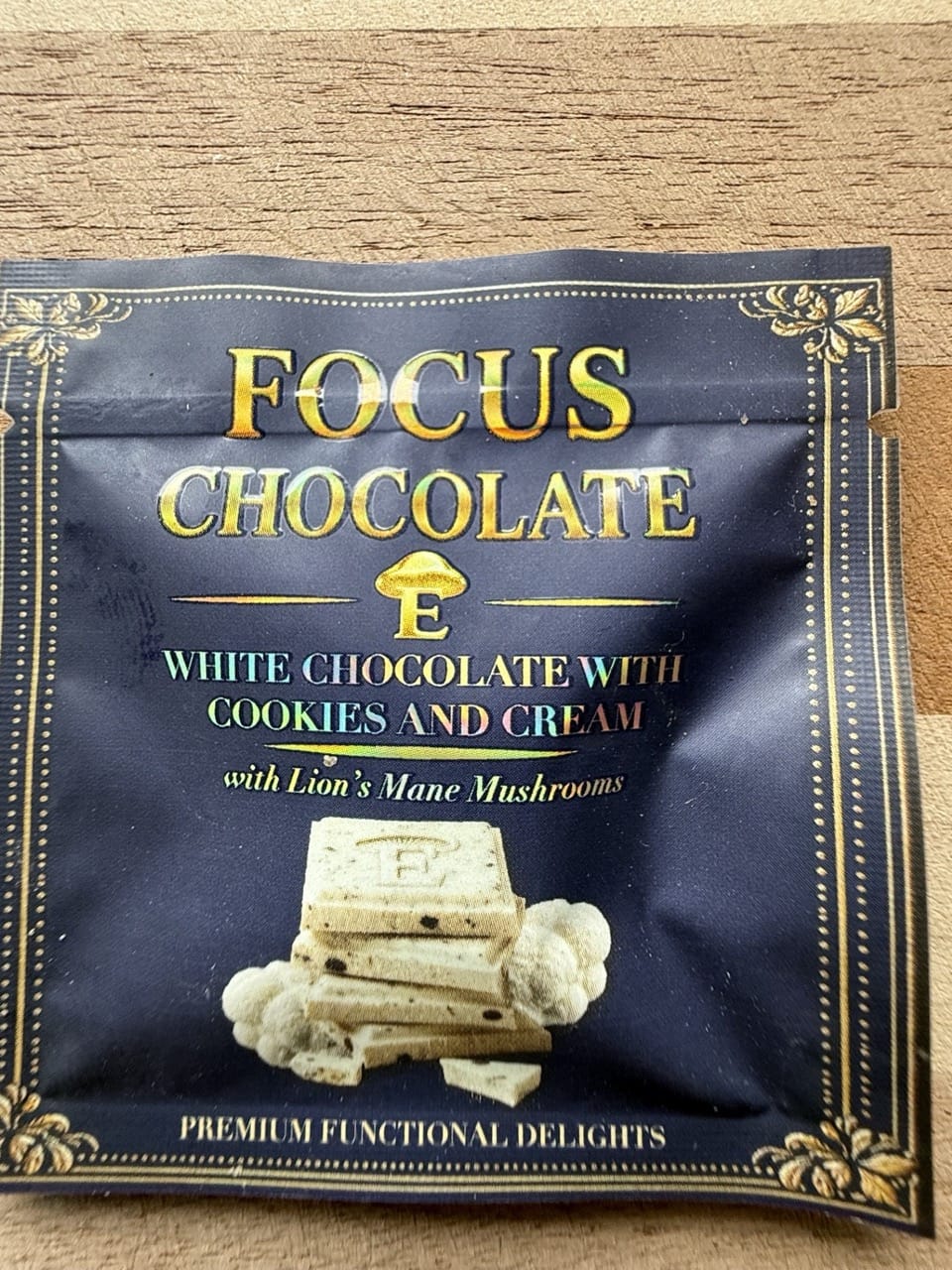
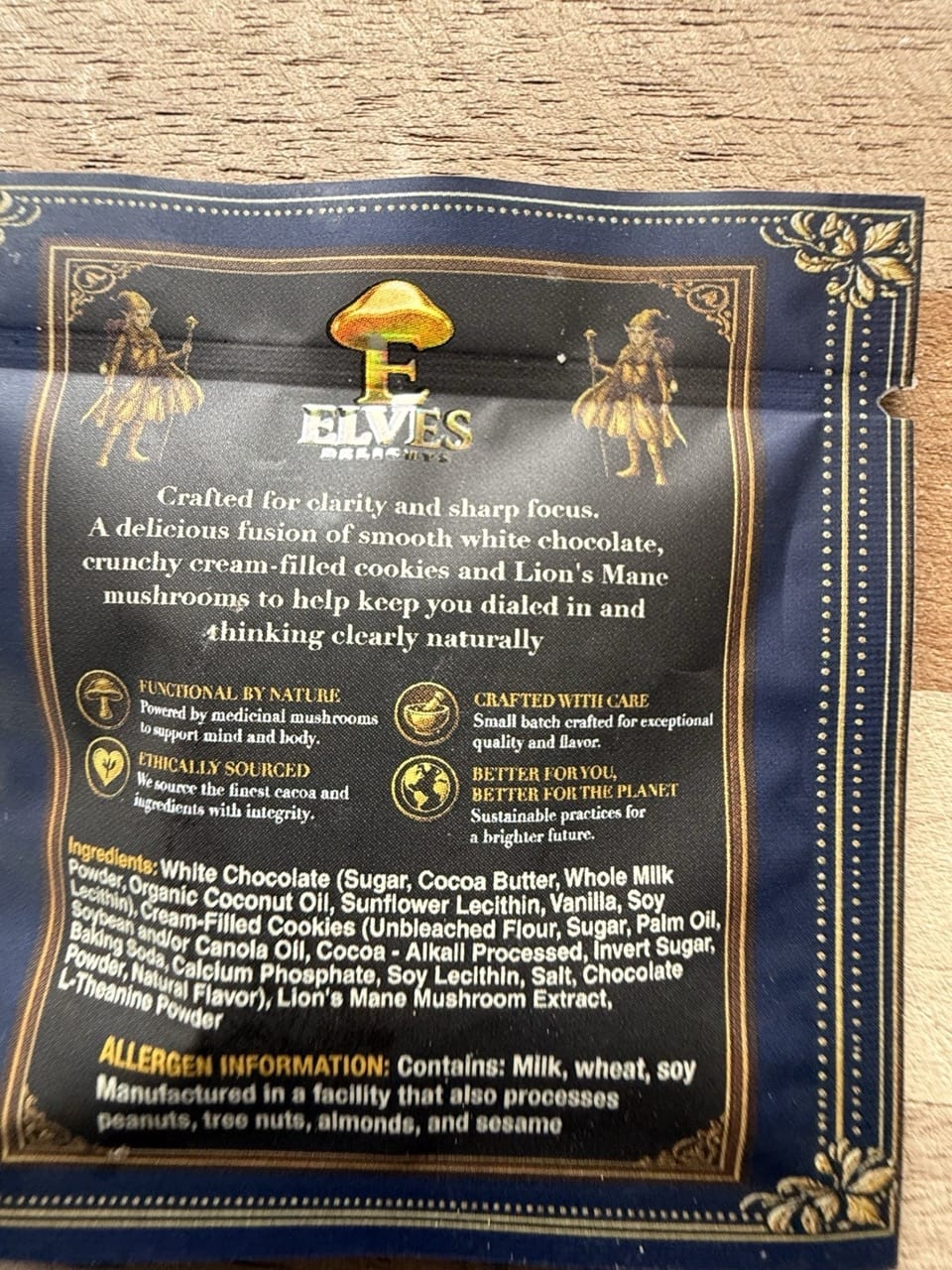
Elves Delights chocolate displayed 3 “functional” chocolates for “Focus,” “Energy,” and “Calm”. Elves uses various mushroom extracts to “support” the claimed benefits. However, the research on the mushroom extracts used in these bars is scant and lacks a solid foundation.
Mojo Cacao covered many “mindful” boxes: “plant-based, functional, indulgent." Its brochure stated, also organic, gluten-free, and vegan. Cocoa butter is the first ingredient in their bars, followed by cashew protein. Coconut sugar pops up again as the sweetener.
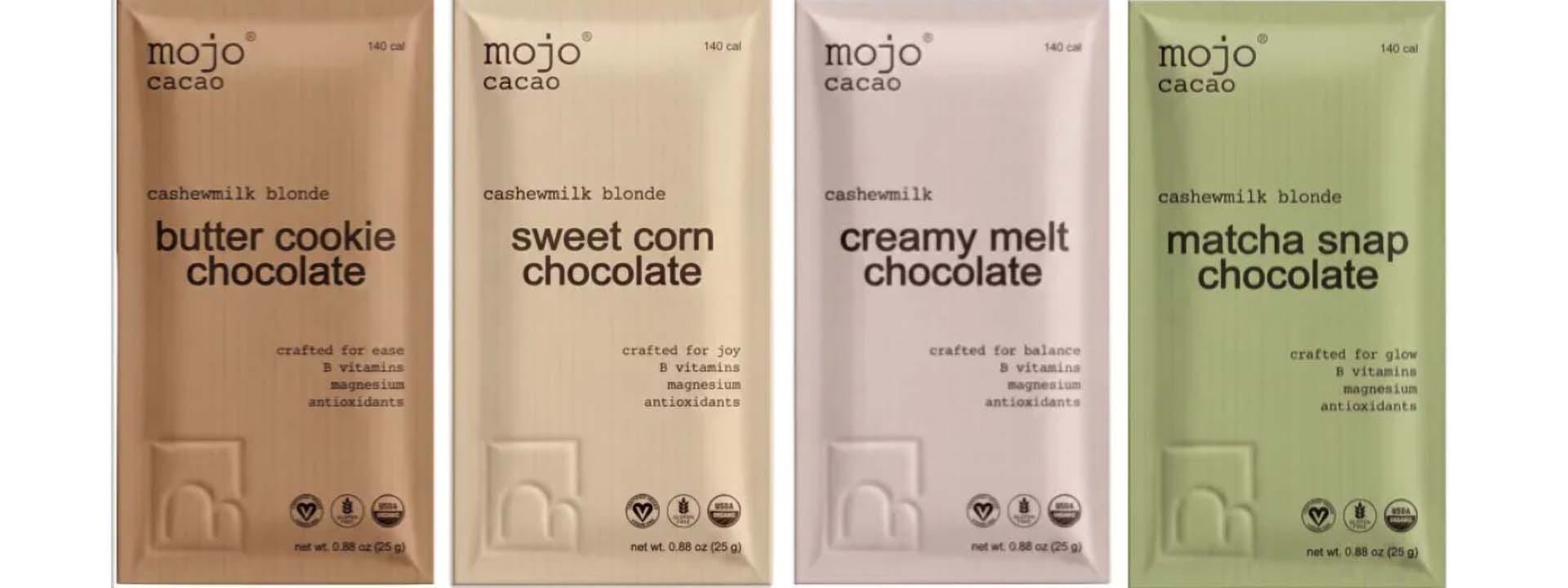
Caution: My security software blocked its website, mojocacao.com so the brochure provided my information.
Bottom line on these “functional” treats:
Have the treat you like, but eat it for enjoyment, not for their touted extra benefits.
But Wait, There’s More!
The big standout food this year? [drum roll please …] DATES!
Dates were a prominent food at the FFS, likely due to FFS show partnering with the Saudi Dates commodity folks.
As a standalone food, I love dates. I saw all kinds this year, not just the huge Medjools and the more familiar Deglet Noors, but lesser-known varieties such as super-dark Ajwa variety (smaller, nearly black, but sweet and chewy).

Medjool dates.
Suggestion to makers: Somebody pit the Medjools and coat them in some high-quality dark couverture. Even if the couverture is 100% unsweetened, the dates will do all the sweetening necessary. Stuff some with pistachios or walnuts before coating. I’m telling you there’s a market for these!
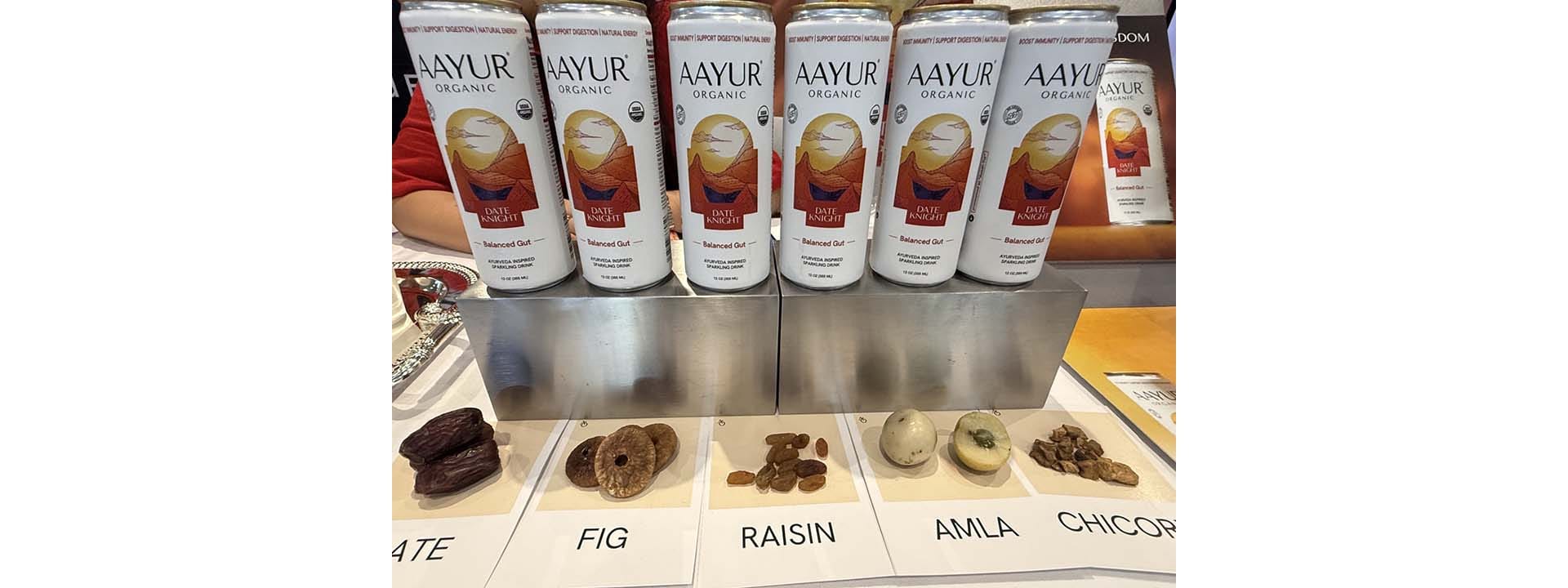
I even tasted Aayur Organic “Date Knight” sparkling drink, made with their “generational blend” of dates, figs, raisins, amla (think Indian gooseberry), and chicory, and small amounts of other juices and natural flavors. It’s 60 calories in 12 ounces, fewer than most other sweetened beverages. Unique, enjoyable flavor. It’s $24 for a 6-pack.
About the Author: Keith Ayoob is Associate Clinical Professor Emeritus of Pediatrics at the Albert Einstein College of Medicine in New York City where he directed a nutrition clinic for 33 years for persons with special needs. He also works with many agriculture and food commodity groups and recently became a Level III-certified chocolate/cocoa taster through the IICCT.