Cracking Barry Callebaut’s “New” Flavourcode™ | #PSC 244
OVERVIEW: Episode 244 of #PodSaveChocolate explores Barry Callebaut’s recent announcement of Flavourcode™ – their “proprietary (patent pending) fermentation platform” they say is set to revolutionize chocolate. (Again?) But, what is Flavourcode™, actually?
Timing and Links to Watch & Comment
Links below to watch LIVE and to view the archived episode.
cracking-barry-callebaut-new-flavourcode-psc-244

Watch and comment LIVE or view the archived episode!
Subscribe (free!) to the @PodSaveChocolate YouTube channel, like this video, comment, and share this episode to help grow the #PSC community.

Watch and comment LIVE or view the archived episode on LinkedIn.
Join my network on LinkedIn to receive notifications and to refer business to each other.

Watch and comment LIVE or view the archived episode on TheChocolateLife page on Facebook (for 30 days, then watch the archive on YouTube).
Follow TheChocolateLife on Facebook to receive notifications and catch up on other content.
Episode 244
The Thesis
Barry Callebaut recently announced [« link to press release on the BC website] Flavourcode™ [« link to product page on the BC website], “a proprietary approach to cocoa fermentation, designed to create distinctive natural flavor profiles and reproduce them consistently,” which Dries Roekaerts, Callebaut’s President, Customer Experience, characterized as “a new innovation platform that opens a new chapter in chocolate taste innovation.”
But, what precisely is this new innovation platform, which the company also describes as proprietary?
Note: Everything presented here regarding Flavourcode is based on publicly-available sources
To answer that question I am going to refer back to my experience as an in-person participant in the global launches of
- Ruby Chocolate (Shanghai, 2017);
- Hidden Persuaders in Cocoa and Chocolate (Köln, 2018);
- WholeFruit (San Francisco, 2019); and
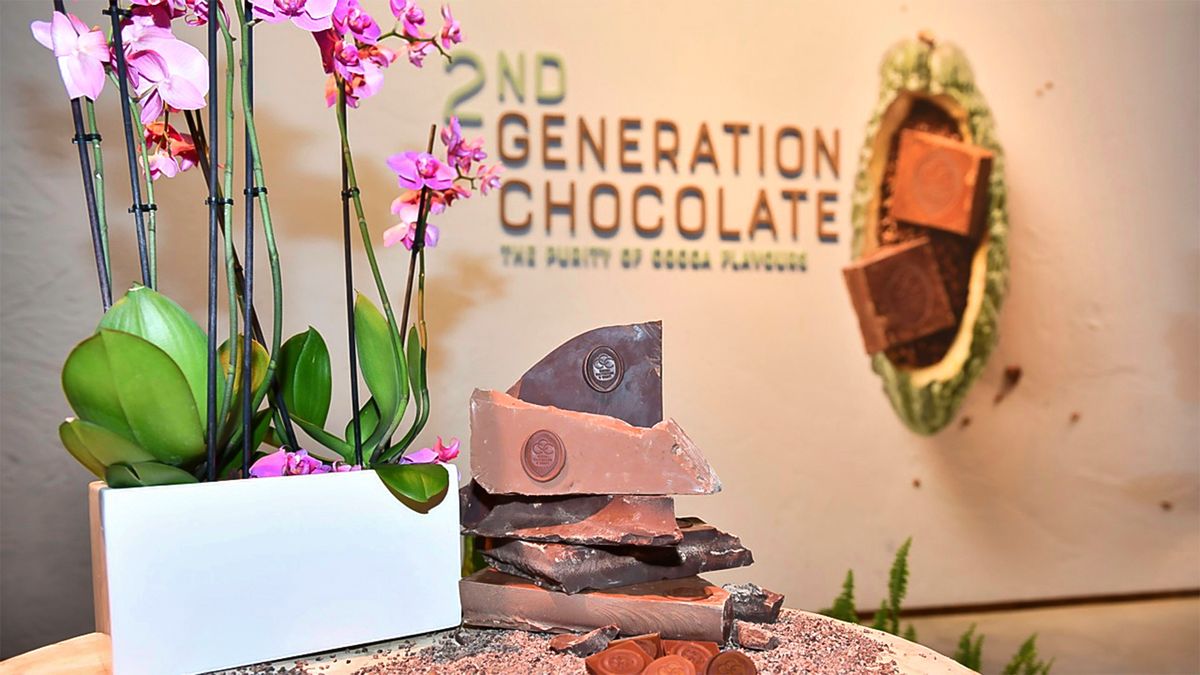
- 2nd Generation Chocolate (Venice, 2022).
These experiences provide me with a strong basis against which to explore the likely disconnect between what is being said, and what is actually going on behind the scenes: is this really a revolutionary innovation as BC claims … or is it something else?
While I do see a disconnect between what BC is saying about Flavourcode and what “the truth” likely is, I also see a deliberate through-line from Ruby to Flavourcode in the marketing language being used that goes back over 100 years.
Some History
This through-line can be traced to how Crisco® was marketed when it was introduced in 1911, a thesis proposed by historian Helen Z. Veit in 2019. Cottonseed had a bad reputation; P&G’s ads avoided naming the primary ingredient (cottonseed oil left over from candle making), and stressed “the Crisco process” (i.e., hydrogenation), “purely vegetable,” and “Crisco is Crisco.”
Processing was framed as purification.
The sleight of ad was deliberate – pay no attention to what Crisco is or how it is made, you can put your trust in us – P&G and other industrial food brands, including Hershey.
Crisco began as a supply problem for P&G, and the demand was built afterward.
And it did not hurt that Crisco was kosher pareve. P&G targeted Jewish buyers explicitly, including 1913 Yiddish ads and in 1933’s ‘Crisco Recipes for the Jewish Housewife.’ Veit noted that “there's not much evidence that 19th-century Americans objected” to lard’s flavor. It was cost, not taste, that was lard's weakness.
None of this was new even in 1911, and it was not the work of the public relations pioneers who are often targeted for blame. The Crisco campaign came out of the J. Walter Thompson agency years before Edward Bernays published Propaganda (1928) and later gave the practice a name: “the engineering of consent.” His method of letting trusted voices carry the message for the seller is recognizably the same, though. A modern economic perspective can be drawn from the work of Charles Hugh Smith, who argues that when industry produces more than people need, it is the job of marketing – “propaganda designed to financially benefit a private entity” – to manufacture the demand to absorb the surplus.
Crisco fits that pattern: surplus first, trust second, demand third.
The Present “Invention”
This is similar to what I see with Callebaut’s marketing language around Flavourcode:
“ ... the taste consistency to make your signature creation again and again. And the trusted workability Callebaut is known for.”
Looking back, I see this same pattern in Callebaut’s language regarding Ruby, Whole Fruit, and 2nd Generation Chocolate.
P&G did not invent the hydrogenation process that led to Crisco. They bought the inventor and his patents.
P&G had a large stock of cottonseed oil (candle sales had fallen as electric lighting spread). P&G hired Wallace McCaw in 1909 and bought his patents on turning cottonseed into imitation lard.
Similarly, Callebaut did not invent any of the basic processes that led to the development of Ruby, WholeFruit, or 2nd Generation Chocolate. Nor did they invent any of the basic processes that led to Flavourcode: they borrowed the work of other, filed off any serial numbers, found ways around patent restrictions, and introduced the results as their own work, using language based largely on a, “Trust us, bros,” attitude toward their customers.
I can personally attest to borrowed work as aspects of the Hidden Persuaders marketing are built on work I did for the Cacao of Excellence after correspondence with BC marketing executives.
What Callebaut did was to figure out ways to industrialize production – produce products at scale: Ruby, WholeFruit, and 2nd Generation Chocolate are reruns of P&G’s Crisco playbook, so far far less successfully.
The question is: will Flavourcode meet the same fate?
While I can’t speak for the motivations that led to the development of Ruby and WholeFruit at this remove, I can speak to the motivations that led to the development of 2nd Generation Chocolate: market research. I was there in Venice in 2022, I remember the presentation from the marketing company that had been hired.
BC execs “found” a latent demand in consumer sentiment and built an entire product strategy around that perceived latent demand. What was 2G Chocolate? The ethos of the craft movement – start with good beans and ferment them well – then figure out how to produce chocolate with reduced bitterness and astringency and less sugar on an continuous process industrial chocolate manufacturing line using those beans.
Concluding Thoughts
Innovation? Con? Something else? … These will be presented during the livestream.
Related Posts
 Clay Gordon

Scroll down for the description of “sprouting” fermentation.

This appears to be a Callebaut patent for Flavourcode (other filings may not be public, yet). It differs from how Callebaut describes Flavourcode (beans fermented with their pulp in sealed vessels, native yeasts guided), so this may may be an earlier or alternative route, or only part of Flavourcode.
A core claim of the patent: ferment cocoa pulp alone with a yeast starter (Saccharomyces cerevisiae in claim 1; the description lists other yeasts such as Pichia kudriavzevii, Hanseniaspora spp.) in a closed reactor under anaerobic conditions. The fermented pulp ("Booster") is then applied to unfermented or partly fermented beans, which ferment preferably aerobically for at least 48 hours.
 Šeremet et al.
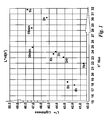
The Callebaut patent for the Ruby process.
 De Vuyst et al.
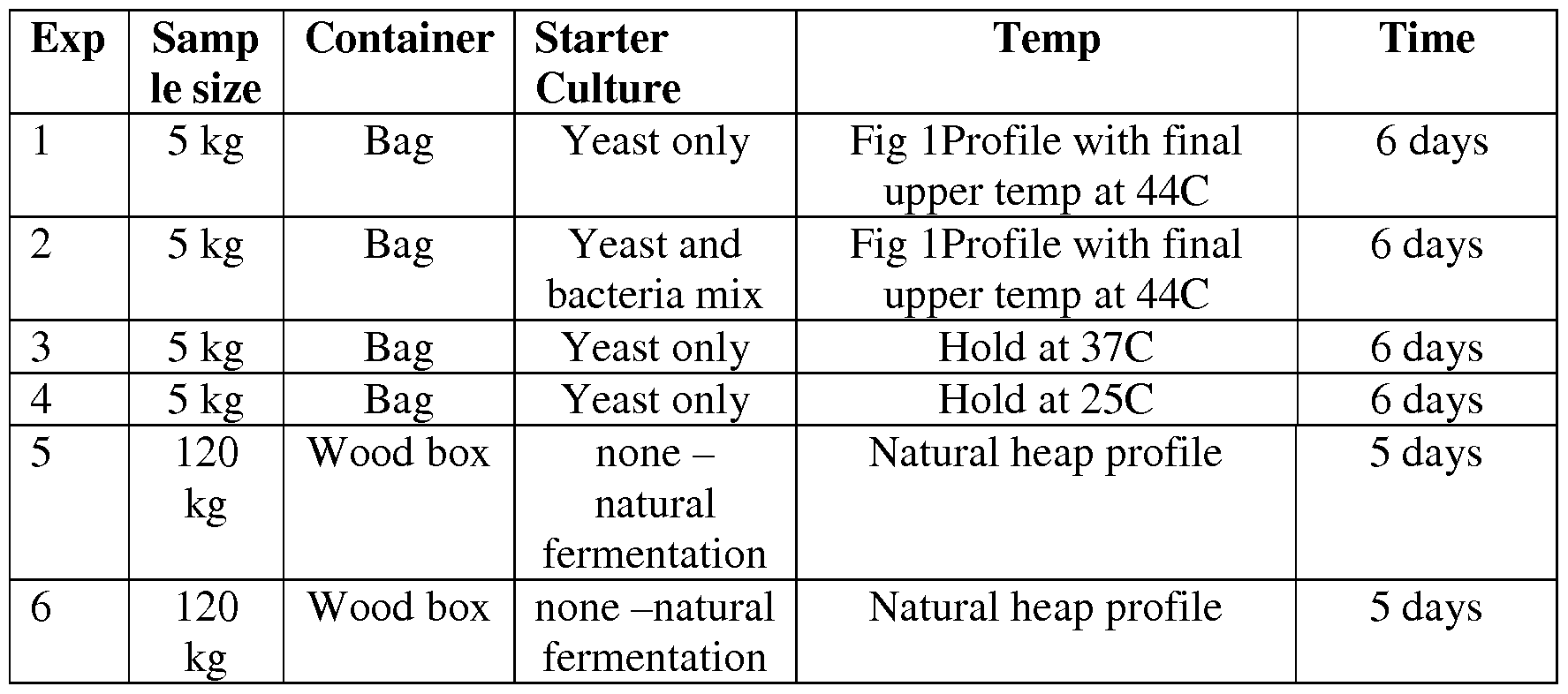
The Mars patent.
 Clay Gordon

2017
 Clay Gordon

2017
 Clay Gordon
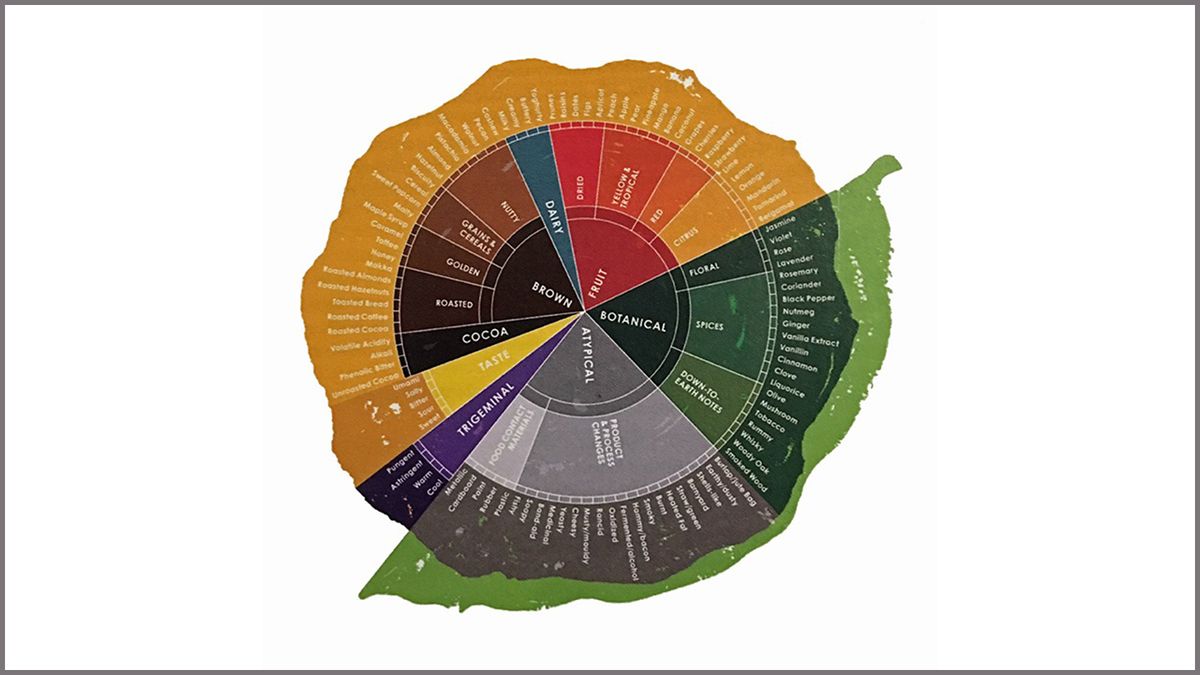
2018
 Clay Gordon

2019
 TheChocolateWire
2022
Future Episodes
What does a cocoa “recovery” look like?
Episode Hashtags
#flavourcode #BarryCallebaut #Callebaut
#cocoa #cacao #cacau
#chocolate #chocolat
#PodSaveChoc #PSC
#LaVidaCocoa #TheChocolateLife
#PodSaveChocolate and #TheChocolateLifeLIVE Archives
To read an archived post and find the links to watch archived episodes, click on one of the bookmark cards below.
 Clay Gordon
Episodes 201-300 (links to older PSC archives are in the top nav).
Clay Gordon